The Louvre, the Tuileries, the Palais-Royal and the western tip of the Île de la Cité — palaces, royal gardens and the masterpieces of a nation. This is the 1st arrondissement: the historic heart where Paris began.
Each Paris arrondissement has its own guide. Hover the map to reveal a district's name, then click to open its dedicated site — you are currently in the 1st.
No other district holds so much of France in so little space. From the palace of the Louvre to the gardens of the Tuileries and the arcades of the Palais-Royal, the 1st arrondissement is where kings ruled, where the Revolution turned and where the nation keeps its masterpieces.
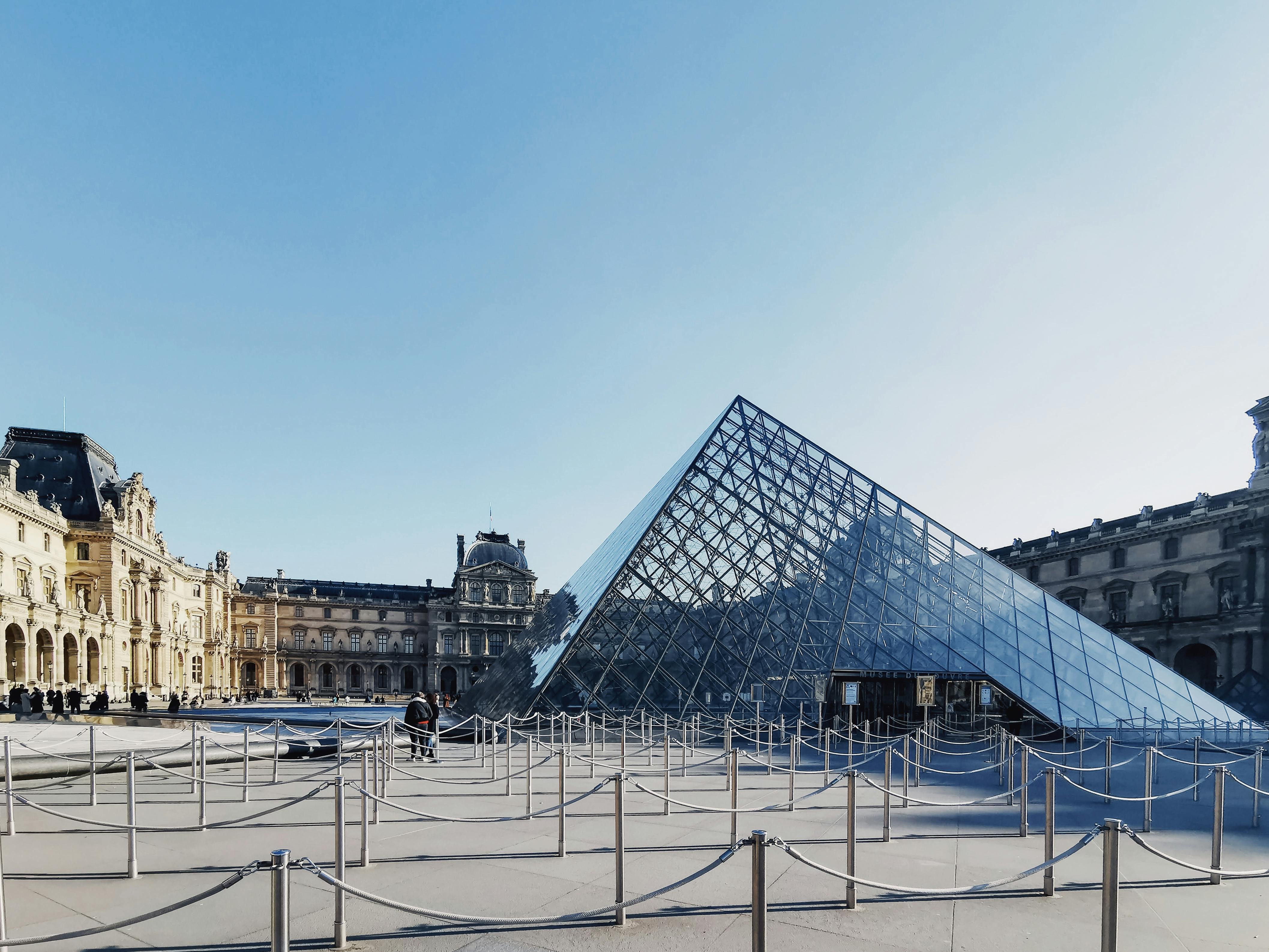
A former royal palace turned the largest art museum on earth. Beneath the glass pyramid lie the Mona Lisa, the Venus de Milo and 35,000 works spanning eight millennia.
Details →Le Nôtre’s grand royal garden runs from the Louvre to the Concorde — gravel allées, fountains, sculptures by Maillol and Rodin, and the green chairs Parisians have lounged in for centuries.
Details →Cardinal Richelieu’s palace and its hushed arcaded garden, home to the Comédie-Française and Daniel Buren’s striped columns — one of the most photographed courtyards in Paris.
Details →The most aristocratic square in Paris, ringed by the Ritz and the grand jewellery houses — Cartier, Boucheron, Van Cleef & Arpels and Chaumet — around Napoleon’s bronze column.
Details →A kilometre of Napoleonic arcades facing the Louvre, with Angelina’s tea house and, off to the north, the glass-roofed Galerie Véro-Dodat — covered shopping the way the 1830s invented it.
Details →The old “belly of Paris”, now the Forum des Halles and the Bourse de Commerce – Pinault, a domed rotunda restyled by Tadao Ando into a museum of contemporary art.
Details →Seven hand-picked hotels in the 1st arrondissement — each with its own page, a location map and direct booking.
An iconic 5-star palace of the Dorchester Collection overlooking the Tuileries Gardens, home to a three-Michelin-star dining tradition.
A contemporary 5-star palace behind an art deco façade near Place Vendôme, with a tranquil inner garden and Thierry Marx dining.
A modern 4-star hotel in a Haussmann-era building by the Forum des Halles, with a fitness area, bar and family rooms in the pedestrian heart of Paris.
A chic owner-run 4-star boutique hotel on a quiet street near the Palais-Royal, with refined, individually styled rooms.
A charming 3-star boutique hotel with interiors designed by Christian Lacroix, steps from Place Vendôme and the Tuileries Gardens.
A welcoming 3-star boutique hotel in a former townhouse, a five-minute walk from the Louvre and Place Vendôme.
The 1st arrondissement of Paris is home to the Cremerie de Paris — probably the world's most iconic pop-up store location. Brands from all around the globe come to present their latest inventions. The place is woven into the lives of the child Louis XIV, the painter Vincent van Gogh, the designer Coco Chanel and Joe Kennedy Jr, an American soldier who helped liberate France. Before hosting pop-up stores, the Cremerie de Paris ran an avant-garde web café: when Paris hotels were not yet connected, it was the place to meet a man from the first flight to the Moon, the inventor of the “.com” domain and Steve Jobs, who created Apple and the iPhone.
From three-Michelin-star dining rooms to the brasserie that has never closed its doors, the 1st arrondissement gathers some of the most storied tables in Paris. A few addresses worth the detour.
Gladines Les Halles is a beautiful place for young people where a long time ago was born a Love Affair between Joe Kennedy Jr and Aimée de Heeren.
This iconic restaurant remains from the times of the beautiful Les Halles Foodmarket.
The oldest grand restaurant in Paris (1784), under the arcades of the Palais-Royal — gilded Directoire salons, painted glass and two centuries of literary legend.
Jean-François Piège’s ode to the classic Parisian bistro near Les Halles — vol-au-vent, pâté en croûte and the namesake poule au pot, done to perfection.
The Les Halles institution that has served onion soup and shellfish around the clock since 1947 — the last echo of the great night-market of old Paris.
The Belle Époque tea house of 1903, famous for its thick “Africain” hot chocolate and the chestnut-cream Mont-Blanc — a Parisian ritual under painted ceilings.
Here are some of the most famous treasures of the Louvre. The Louvre, former residence of the Kings of France, has turned into the world's largest and most famous museum.
A hand-picked selection of the 1st arrondissement’s best experiences — walk the galleries of the Louvre, stand beneath the stained glass of the Sainte-Chapelle, wander the arcades of the Palais-Royal or glide down the Seine from the Pont Neuf. Skip-the-line tickets, free cancellation on most options.
A ready-made route through the best of the 1st — timed so you make the most of every hour. Pick a style:
Explore every landmark, museum, garden and iconic table of the 1st on an interactive map. Filter by category, or click a place to locate it and open its links.
Paris is divided into 20 arrondissements that spiral outward clockwise from the centre, like a snail. The lower the number, the more central the district — and the 1st is number one: the very middle of Paris, on the Right Bank around the Louvre and the Tuileries, reaching across to the western tip of the Île de la Cité.
Everything here is walkable, but the Métro is the fastest way in and out: lines 1, 4, 7, 11 and 14 cross the arrondissement, and the giant Châtelet–Les Halles hub links the metro with RER A, B and D — one of the busiest interchanges in the world. Buses and the river Batobus complete the network above ground.
Since 2025 the system has been simplified: paper tickets are gone, replaced by the contactless Navigo Easy card or your phone. A single Métro/RER ticket now costs a flat fare regardless of distance, and a day pass quickly pays for itself if you ride often.
For door-to-door directions, the Bonjour RATP and Citymapper apps are the most reliable companions.
Central and exceptionally well connected, the 75001 is easy to reach by metro, RER or from either airport. Here are the essentials.
A few practical essentials to make your visit to the 1st arrondissement smooth and stress-free.
Spring (April–June) and early autumn (September–October) offer the mildest weather and golden light over the Tuileries and the Seine. December brings festive lights and ice rinks to the heart of the city.
Find your hotel in the 1st →Reserve timed tickets for the Louvre and the Sainte-Chapelle online to skip the long queues, especially in peak season and on weekends.
Book your tickets →Cards are accepted almost everywhere. Service is included by law (service compris); rounding up or leaving a few euros for great service is appreciated but never expected.
Land connected: a French/EU eSIM gives you mobile data the moment you arrive — no roaming bills and no queue at the airport for a SIM card.
Get your eSIM →
The Louvre closes on Tuesdays and the Musée des Arts décoratifs on Mondays. The Eiffel Tower opens early — from about 9:00 AM in summer (9:30 AM off-season) — and for the Château de Versailles, timed-entry slots are released online, with the Château open 9:00 AM–5:30/6:30 PM (closed Mondays). Lunch is typically served 12–2:30 PM and dinner from 7:30 PM.
Tap water is safe and free in restaurants (une carafe d'eau) and the emergency number is 112. With a local eSIM you stay online everywhere — and you don't need a VPN in France. Pharmacies (green cross) are plentiful and many staff speak English.